What does health data do to the person looking at it every day?
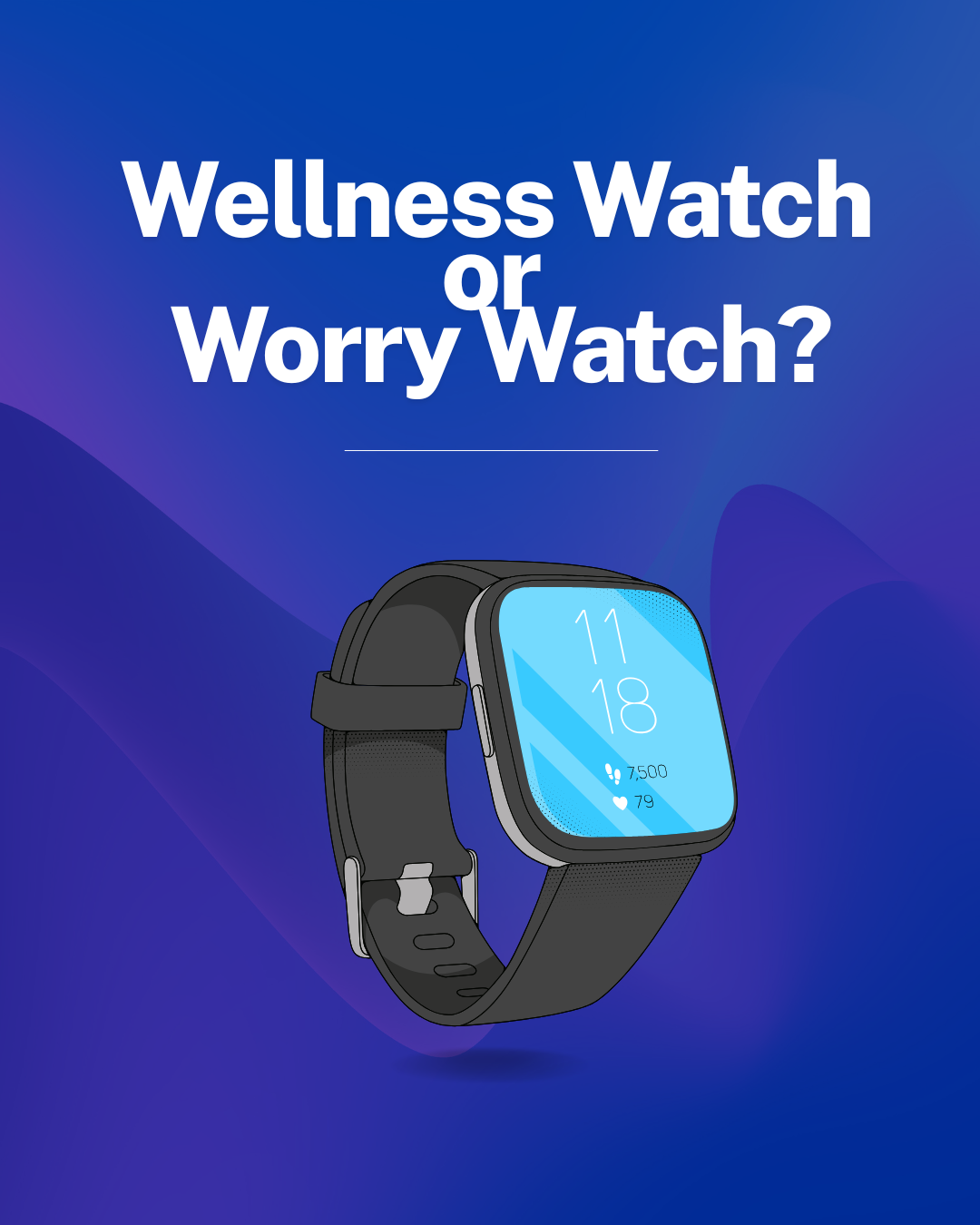
What does health data do to the person looking at it every day? I came across a recent paper with a title that says it well: “Wellness Watch or Worry Watch?”
Researchers looked at the negative psychological impacts of wearable devices. Not because wearables are “bad,” but because we often talk about them as if more tracking automatically means more control.
In a study of 264 participants, wearable users scored significantly higher on obsessive-compulsive traits than non-users. About 1 in 4 users reported negative psychological impacts linked to features like calorie tracking, smart notifications, and sleep tracking. For some users, the numbers did not just inform them but instead made them worry more, and feel worse about themselves.
Wearable research has focused on accuracy, privacy and usability. What gets far less attention is what the data does to a person’s life. So on a good day, a number might be motivating. However, on a bad day, that number can feel like proof that you are failing.
This is the question I think about in my work as a medical writer and one that I think patient-facing health communication has not yet fully reckoned with.
If we are giving people more health data, we owe them clearer thinking about what that data is doing to them.
Link to the paper: https://dl.acm.org/doi/10.1145/3810204