Can Exercise Delay Ovarian Aging? New Research on Adiponectin and Ovarian Reserve
Can we delay ovarian aging?
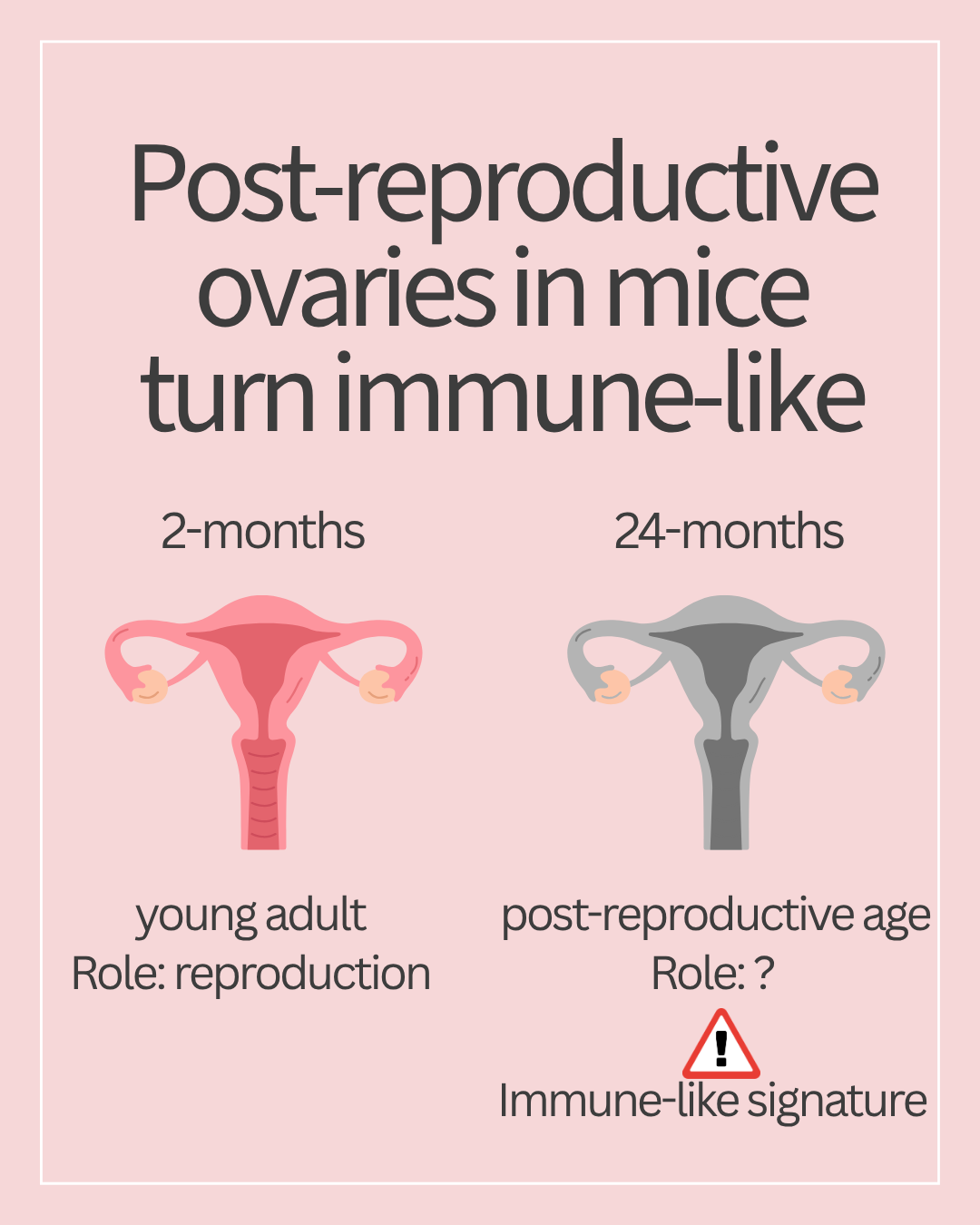
New research published in Nature Aging suggests that physical activity can reduce ovarian aging in mice. The study points to the role of adiponectin, a hormone that rises following physical activity, in preserving ovarian follicles and delaying ovarian aging.

Human cross-sectional study finds an association between physical activity and menopause
Researchers first examined the correlation between physical activity and menopause status in human cohorts (two separate studies in the UK and USA). Important to note: this was a cross-sectional study, capturing a snapshot of the population, which can reveal associations but not causation.
Both studies found that postmenopausal women were less physically active than premenopausal women.
Since these were cross-sectional studies, they can’t determine whether physical activity directly delayed ovarian aging. And since it’s difficult to test ovarian aging (morphological and functional effects in depth) in humans, the team turned to mouse models.
Mouse study reveals physical activity delays ovarian aging
2-month-old mice were divided into 2 groups: an exercise group and a control group. Can you guess what the physical activity was in the exercise group?
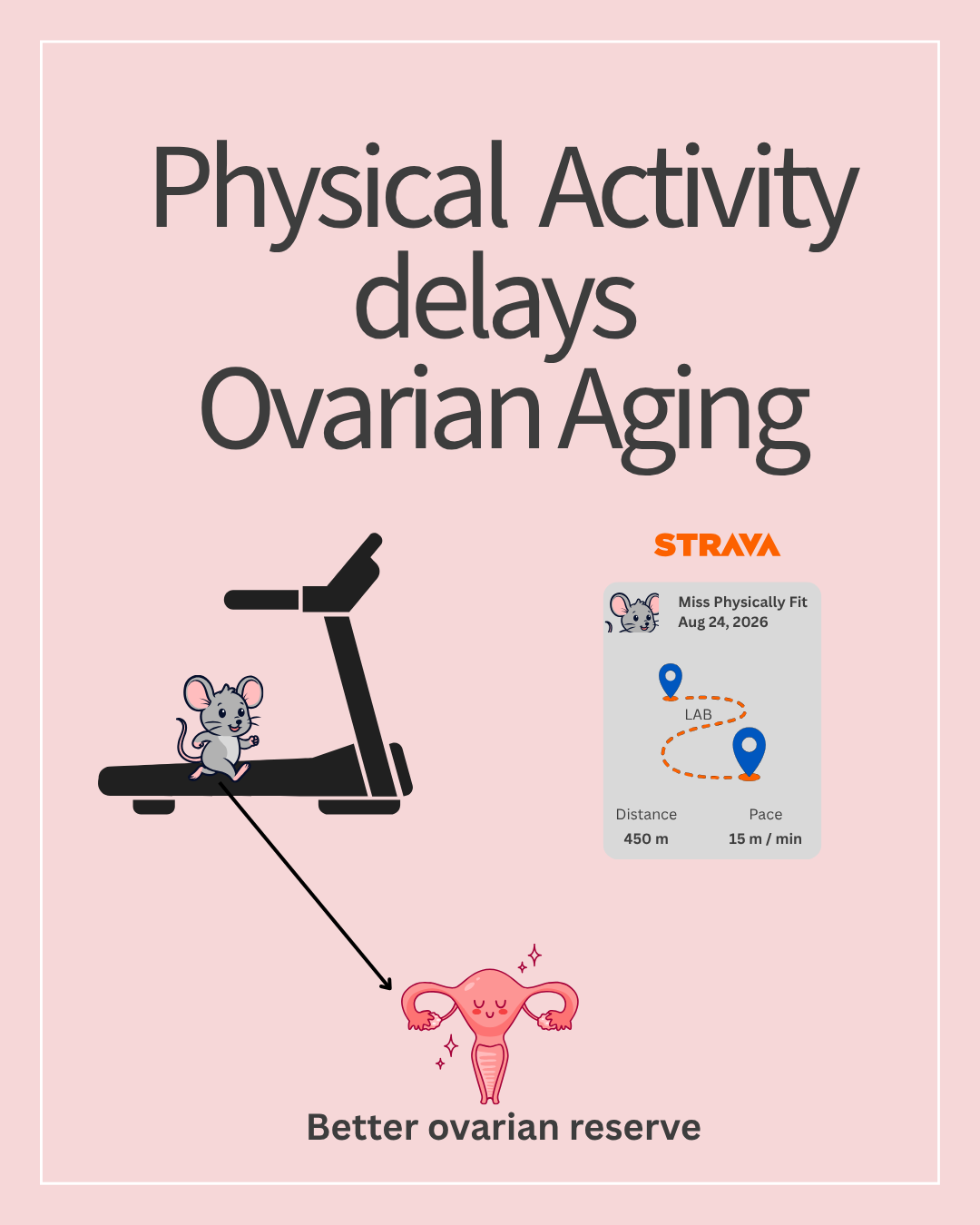
A treadmill workout for 1 month.
(I imagine their Strava run results to be like: 450 m; pace: 15 m/min; time: 30 min. *These are the original experimental methods described in the paper)
After a month, data were analyzed.
Results: a) what remained the same as control mice (they did not run on a treadmill)
-
Body weight
-
Ovary weight
-
Estrous cycle
-
Serum estrogen and follicle-stimulating hormone (FSH)
Results: b) what changed from control mice
-
Number of primordial follicles (correlates to less turnover or reduced ovarian aging): higher
-
Total number of follicles: higher
-
AMH (anti-Mullerian hormone) levels in ovaries (a marker of higher ovarian reserve): higher
-
mRNA levels of growth factors produced by oocytes: higher
(Their Strava would boast of a “New achievement: Ovarian reserve preserved with this workout”).
These results showed that a 1-month physical activity regimen preserved ovarian reserves by reducing the loss of primordial follicles in 2-3-month-old mice.
How does physical activity affect ovarian follicles? An adiponectin effect
What is known: Physical activity increases levels of a hormone called adiponectin. This hormone regulates metabolism, helps lower blood glucose, burn fat, and decrease inflammation.
What is unknown: Do adiponectin levels change in the ovaries, contributing to localized ovarian anti-aging effects?
To test this, scientists measured both adiponectin protein and mRNA levels in the ovaries of mice in both groups (exercise and control). Adiponectin levels (protein and mRNA) were higher in the ovaries of physically active mice than in the control group.
How does adiponectin impact ovarian follicles? Inhibiting mTORC1
For adiponectin to function, it needs to bind to its receptors. Among them, AdipoR1 mRNA levels went up in the exercise group.
What happens after binding? Previous studies have revealed that mTORC1 switches on primordial follicle activation in ovaries, accelerating ovarian aging. The team found that exercise-induced adiponectin suppresses the mTOR pathway, delaying ovarian aging.
The team also engineered adiponectin knockout mice and found fewer follicles than in wild-type mice at baseline. Exercise increased follicular number in both groups; however, the effect was 56% lower in the knockout group. A complete loss (100%) would have suggested adiponectin being the sole mediator of exercise-induced effects. Therefore, this suggests that additional pathways possibly exist.
Additional studies showed that exercise-induced preservation of ovarian reserve decreased by 76% when adiponectin was knocked down specifically from the ovaries.
Together, these experiments suggest that ovarian adiponectin slowed down primordial follicular activation, in part by inhibiting mTOR signaling.
Adiponectin receptor agonist AdipoRon delays ovarian aging
Exercise demands physical exertion, which can get difficult with age. Can you then stimulate the benefits of adiponectin-mediated signaling using therapeutic methods instead?
To test this, the team used AdipoRon- a known adiponectin receptor agonist that binds to the receptor.
2-month old mice administered AdipoRon had significantly higher primordial follicle counts and AMH levels. This suggests that pharmacologically activating the adiponectin receptor could mimic some of the effects of exercise to delay ovarian aging.
1 month of AdipoRon treatment in 7-month-old mice (mid-reproductive age) also showed similar results: better ovarian reserve and higher AMH levels than control mice. Benefits lasted up to 14 months. This contrasted sharply with the control group, where ovarian aging was prominent at 14 months.
Additionally, AdipoRon-treated female mice stayed fertile up to 14-15 months, whereas control mice stopped producing litters by 12 months.
These results make targeting adiponectin signaling an interesting target for ovarian aging.
My take
This study primarily tested the effects of physical activity on ovarian aging in mice. They provide preliminary evidence of the mechanisms involved, but we need much more before we draw conclusions relevant to humans. The authors themselves note that previous studies have produced mixed results. It is safe to say that things are not as simple as: “more exercise = delayed menopause/younger ovaries.”
So, we need to do studies to be more certain with evidence. How? I think that better non-invasive tests for ovarian aging (besides the AMH blood test), additional user-reported data from apps, physiological signals from wearable devices, etc., will improve how we analyze human data to verify these results.
Women have been told for years to exercise and lift weights to maintain bone density. This study raises the possibility that ovarian reserve could also be preserved with increased physical activity. AdipoRon looks promising, yet no clinical trials have tested it.
Looking at other ways to increase adiponectin levels led me into a potential rabbit hole (because I didn’t go down yet, but maybe you should). A 2023 randomized crossover trial (n=39, so it’s a small-scale study) showed that 3 months of daily myo-inositol hexaphosphate (phytate) supplements increased adiponectin levels in patients with Type 2 diabetes. Phytates occur naturally in cereals, legumes, and nuts. This study did not measure ovarian aging, so don’t make that diet change yet. Although it is an interesting mechanism that needs further study.
What I like about this study is that it gives us something testable: a biological pathway connecting physical activity, adiponectin, and ovarian reserve. Next, we need to answer whether the same pathway meaningfully influences ovarian aging in humans.
Reference: Li, B., Zheng, N., Luo, T. et al. Physical activity delays ovarian aging in part through adiponectin-related signaling pathways. Nat Aging (2026). https://doi.org/10.1038/s43587-026-01177-0