The Cell Death Case Files: How Macrophages Get Reprogrammed Inside Tumors
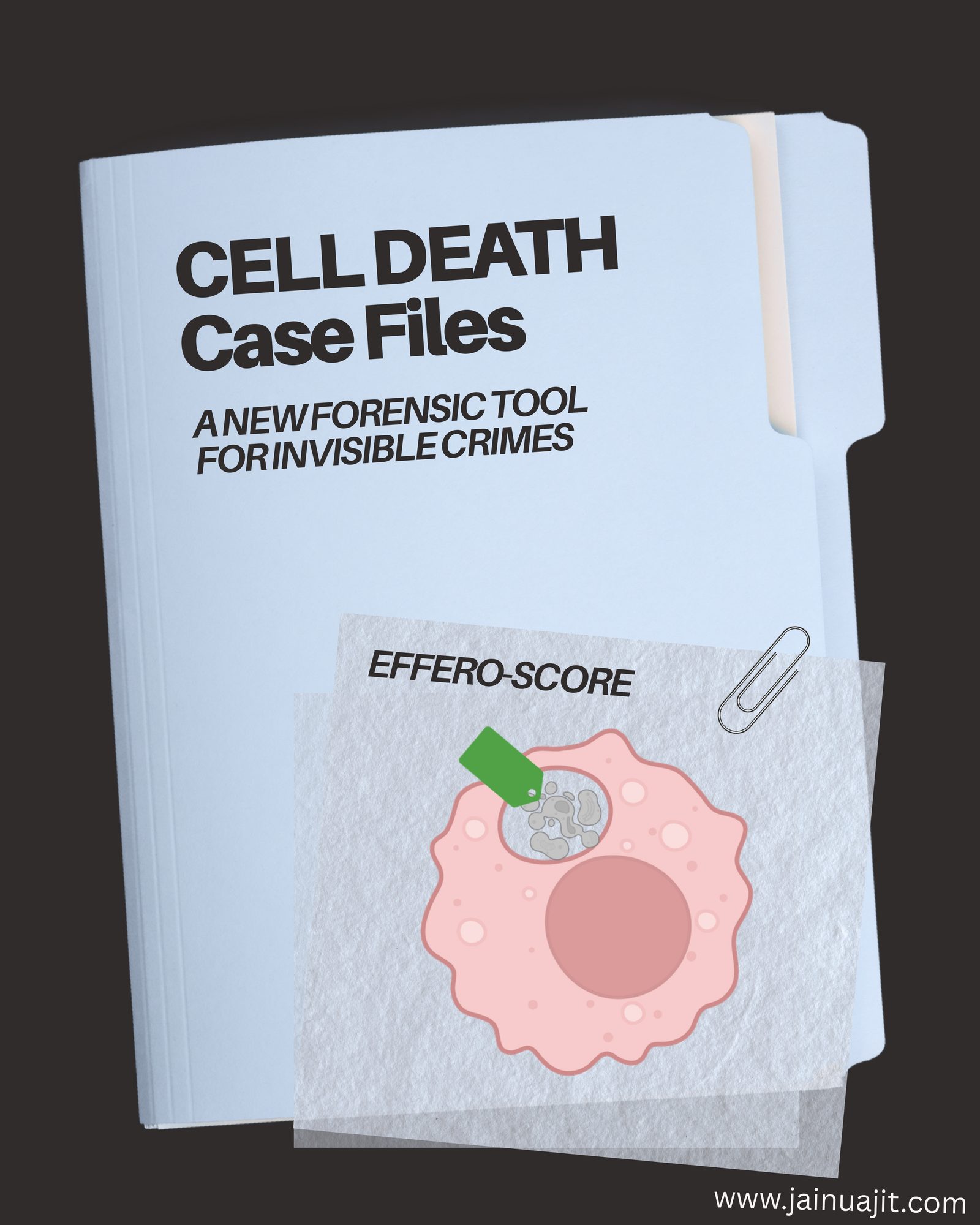
Part of The Cell Death Case Files, a series that reads the biology of dying cells like a detective story. This case is a six-slide mystery for general readers, walking through apoptosis, efferocytosis, and a new forensic tool called effero-score that reveals what immune cells get up to inside a tumor when the evidence keeps disappearing.
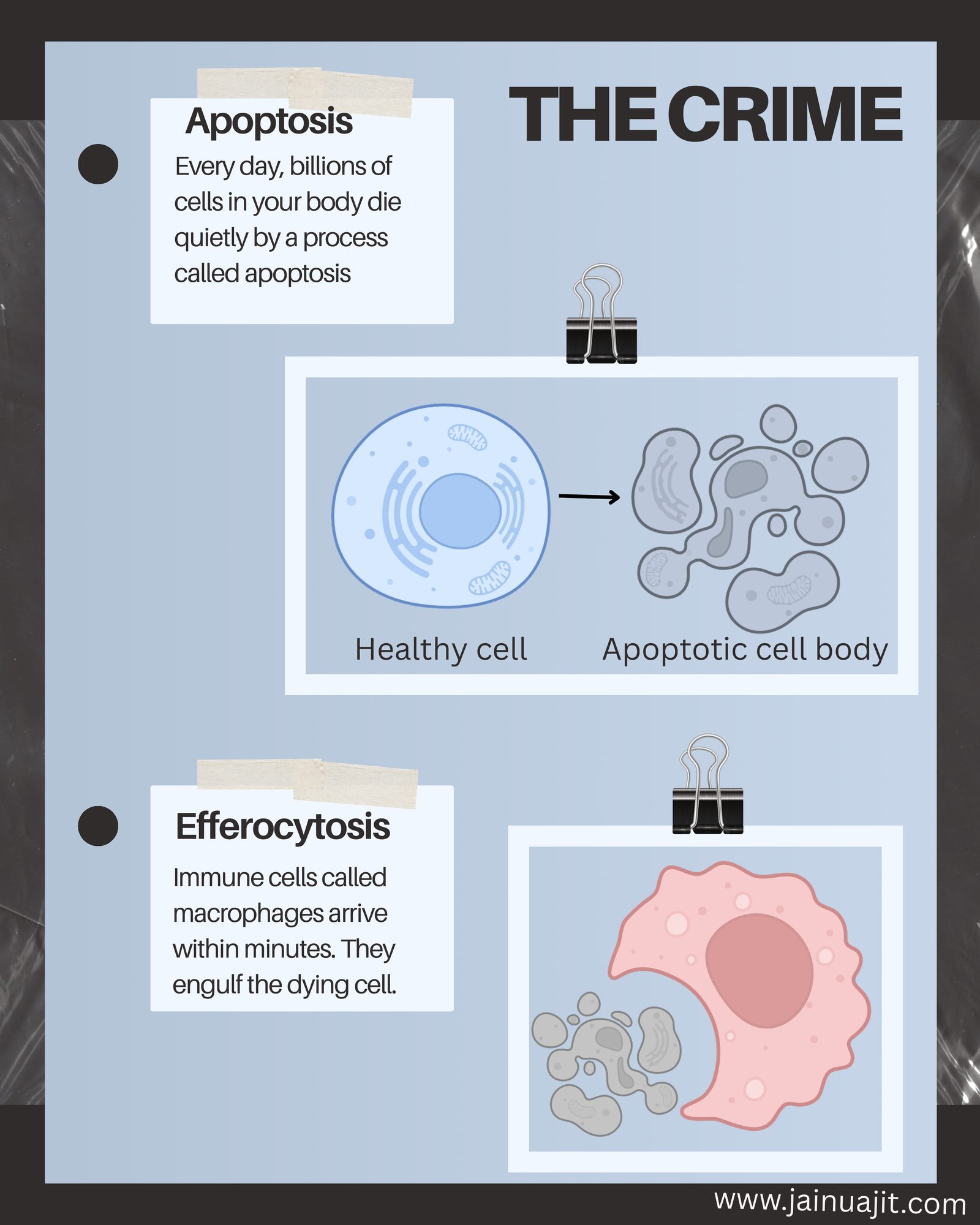
The Crime
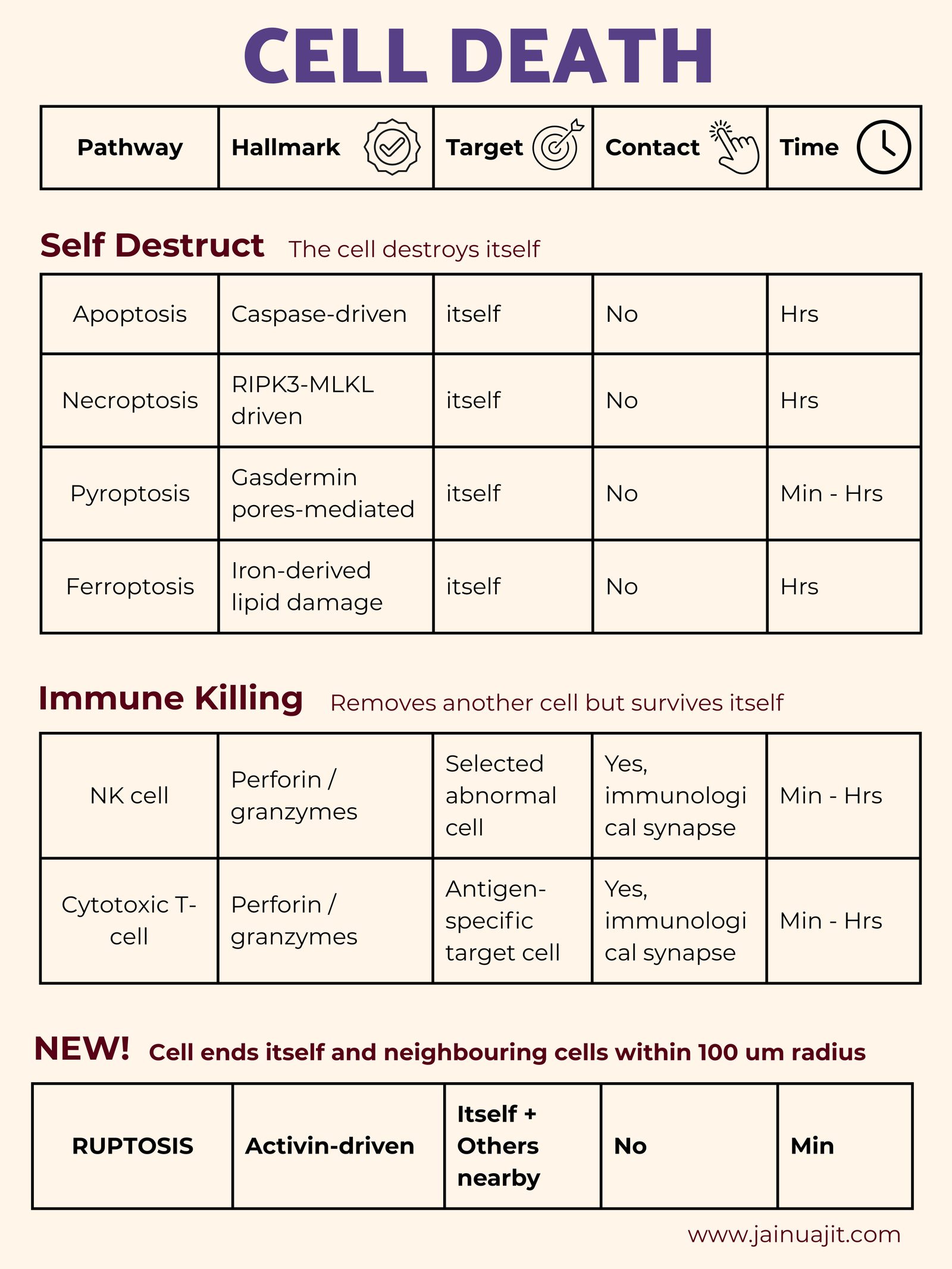
Apoptosis: Every day, billions of cells in your body die quietly by a process called apoptosis. A healthy cell breaks down into an apoptotic cell body.
Efferocytosis: Immune cells called macrophages arrive within minutes. They engulf the dying cell.
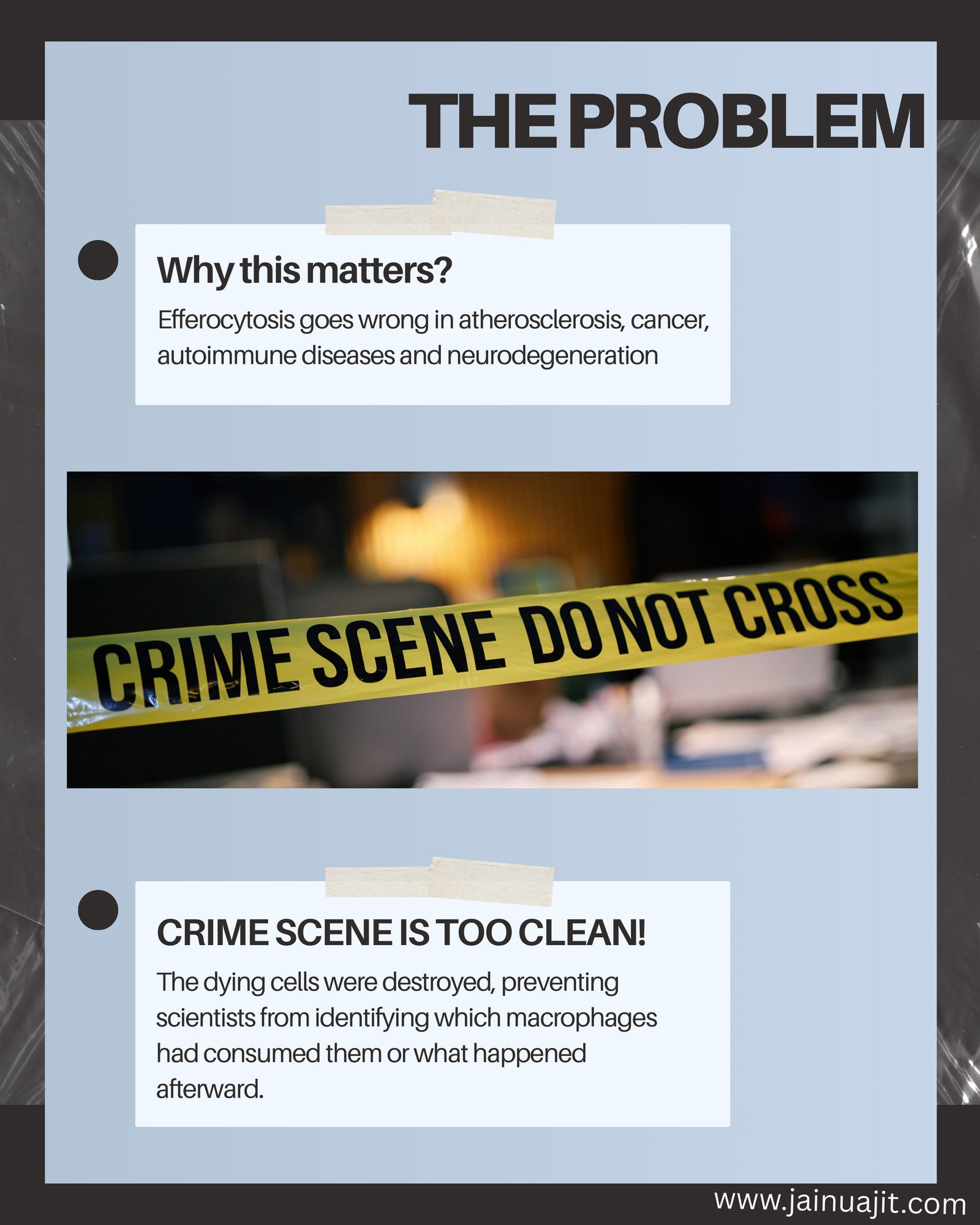
The Problem
Why this matters? Efferocytosis goes wrong in atherosclerosis, cancer, autoimmune diseases and neurodegeneration.
Crime scene is too clean: The dying cells were destroyed, preventing scientists from identifying which macrophages had consumed them or what happened afterward.
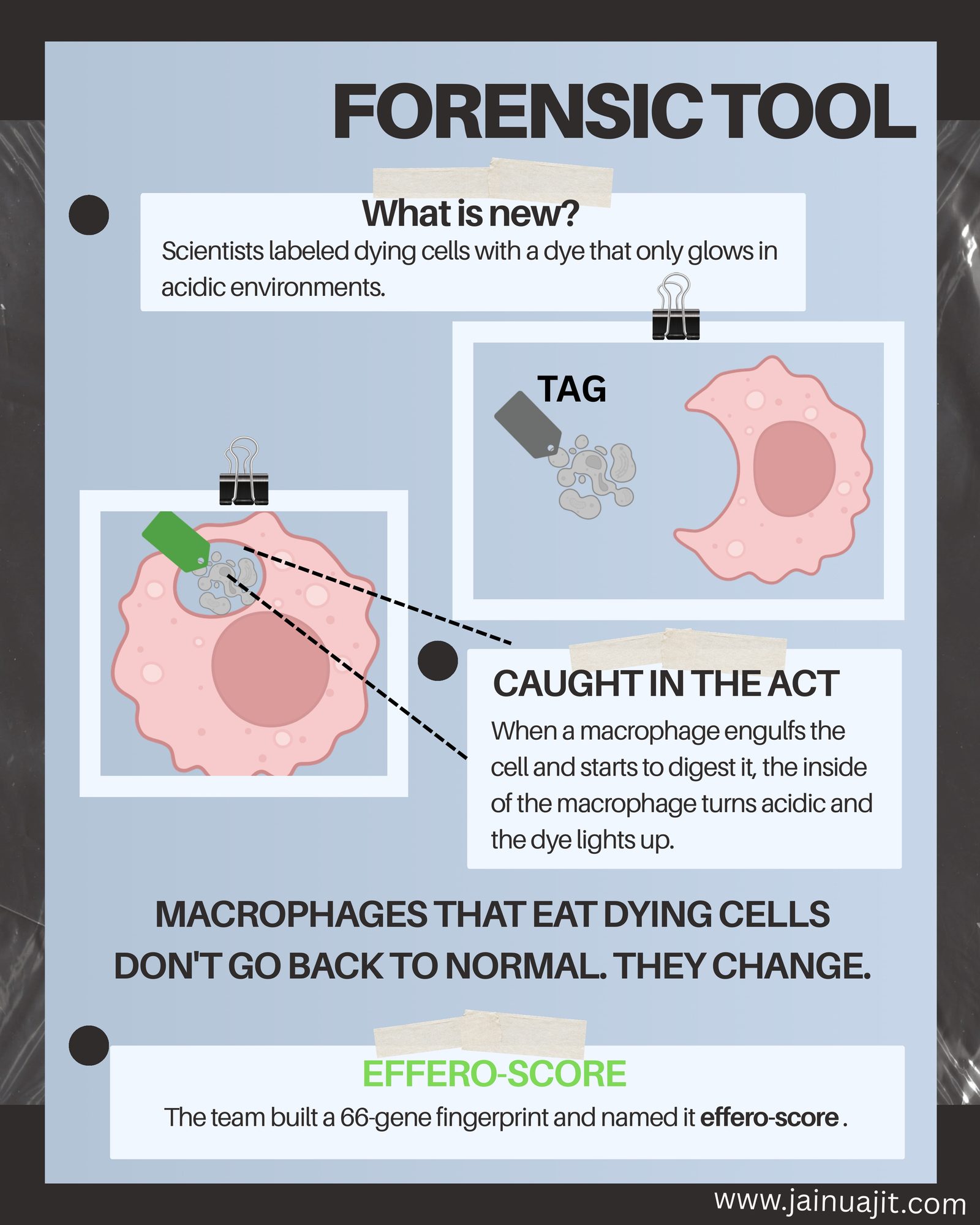
A New Forensic Tool
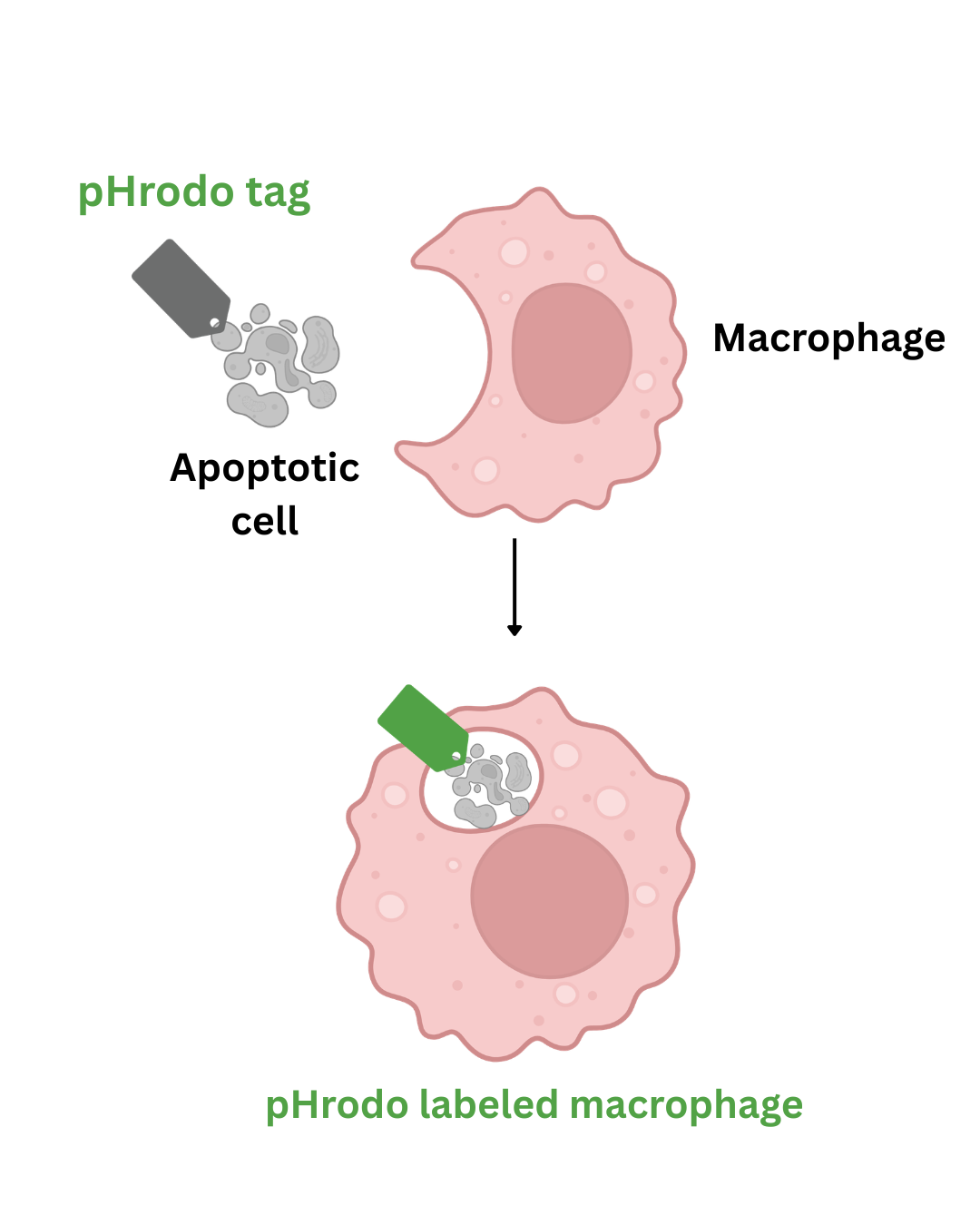
What is new? Scientists labeled dying cells with a dye that only glows in acidic environments.
Caught in the act: When a macrophage engulfs the cell and starts to digest it, the inside of the macrophage turns acidic and the dye lights up.
Macrophages that eat dying cells don’t go back to normal. They change. The team built a 66-gene fingerprint and named it effero-score.
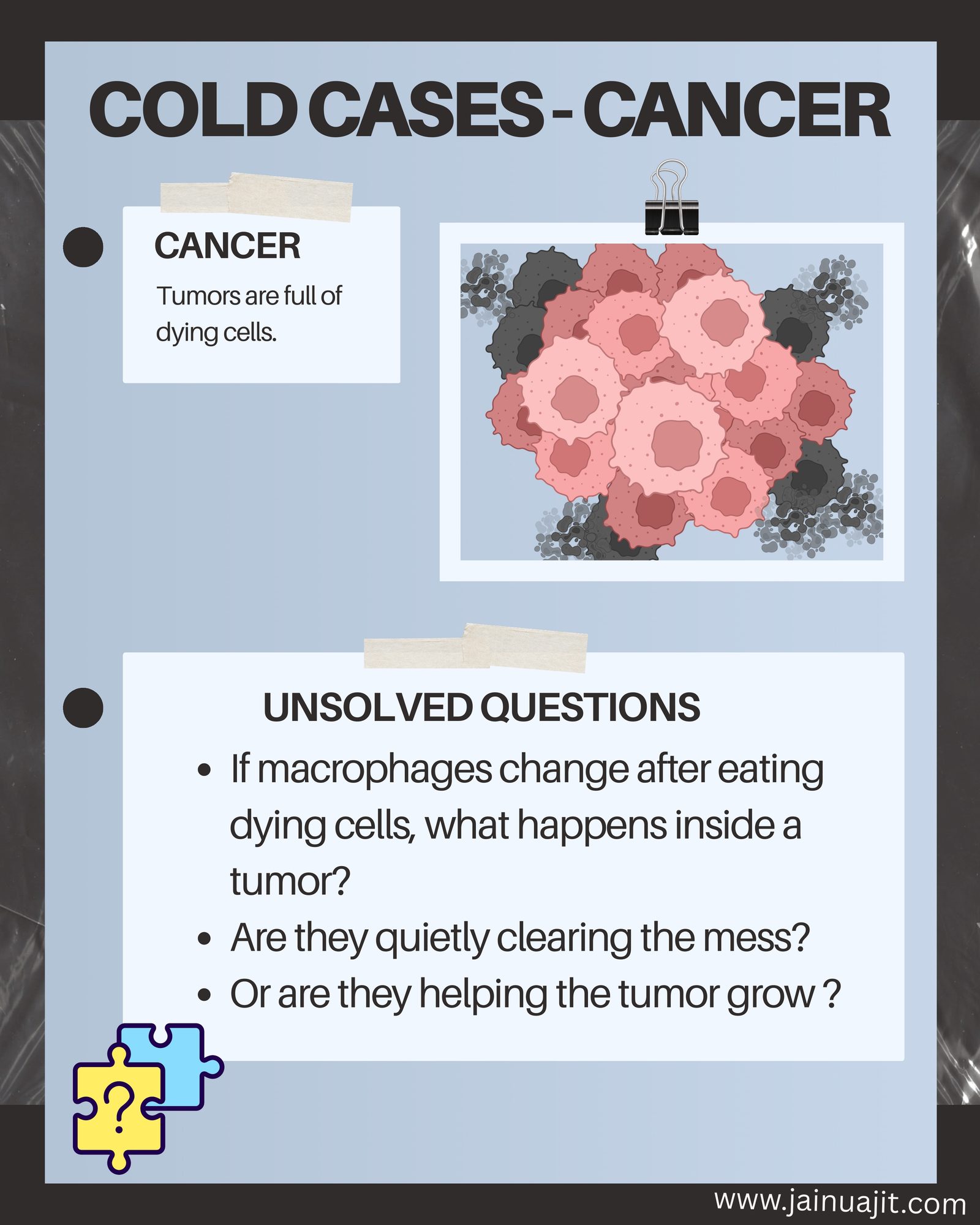
Cold Cases: Cancer
Cancer: Tumors are full of dying cells.
Unsolved questions:
- If macrophages change after eating dying cells, what happens inside a tumor?
- Are they quietly clearing the mess?
- Or are they helping the tumor grow?
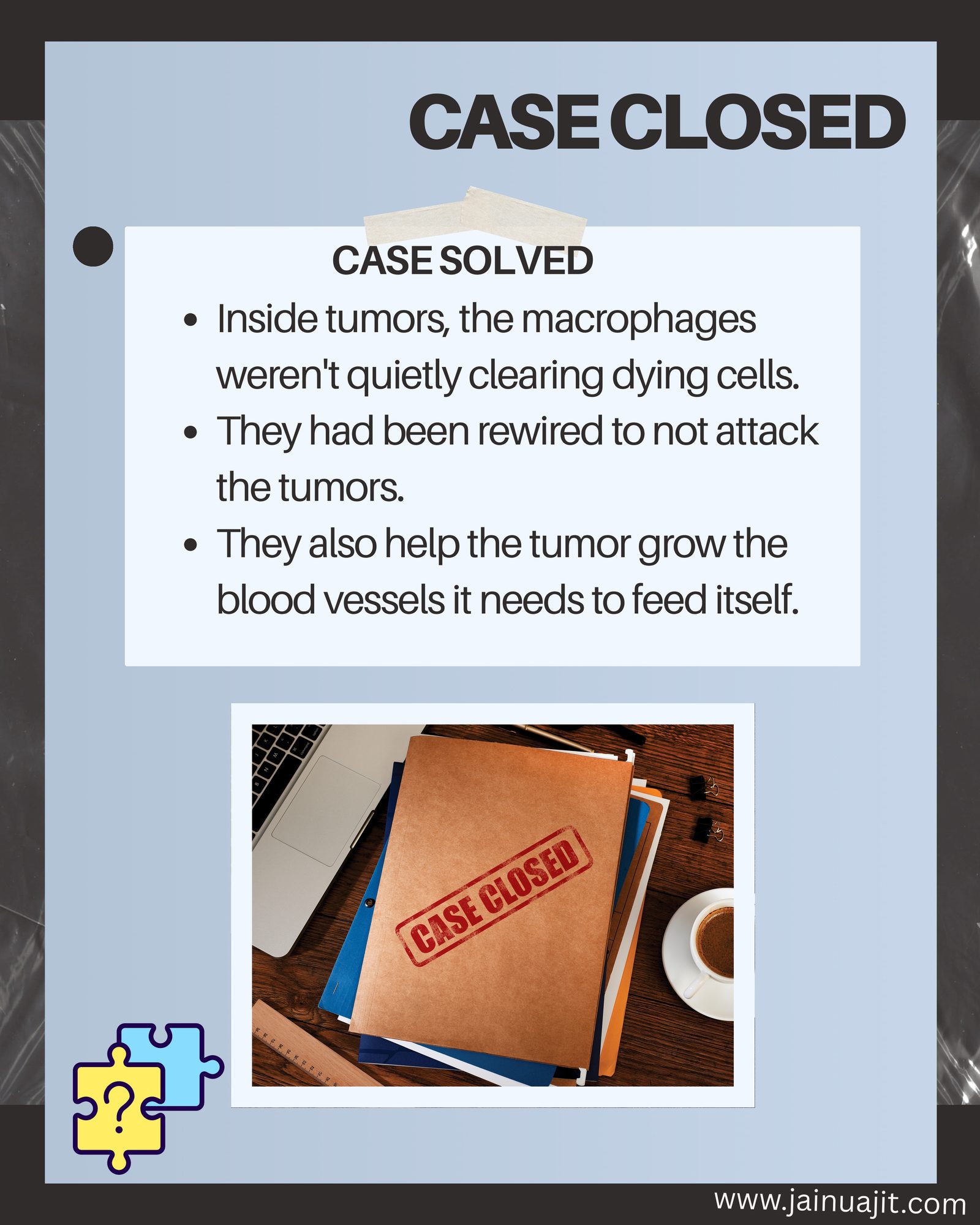
Case Closed
Case solved:
- Inside tumors, the macrophages weren’t quietly clearing dying cells.
- They had been rewired to not attack the tumors.
- They also help the tumor grow the blood vessels it needs to feed itself.